
Key Takeaways
- Motor skills development lays the foundation for physical, cognitive, emotional, and social growth in early childhood.
- Children need regular, structured opportunities to practise movement through play, preschool gym, and daily tasks.
- Milestones for motor development vary by age—supporting them early builds confidence and independence.
- Preschool gymnastics is a powerful way to promote physical readiness, emotional resilience, and life skills.
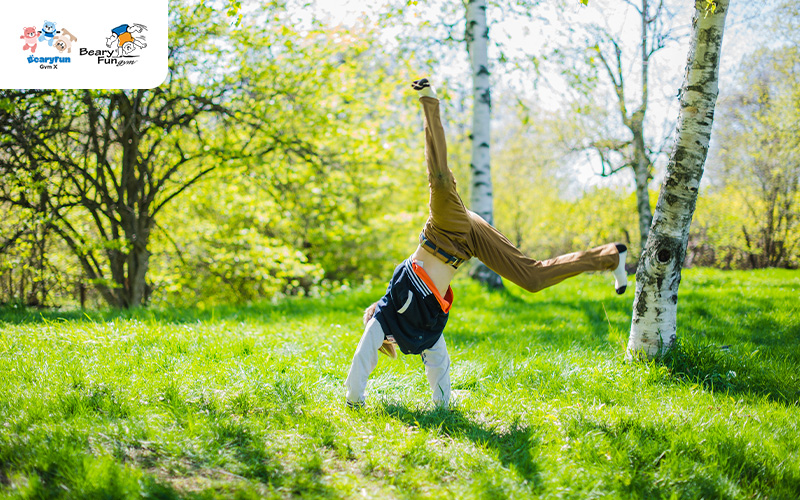
From reaching for a toy to climbing a set of stairs, young children rely on a wide range of physical abilities to explore and interact with the world around them. These abilities form the basis of motor skills development, a crucial aspect of early childhood. It mainly involves building strength, coordination, and control—skills that affect how children move, learn, and grow in every part of life.
As movement-centric activities like indoor and outdoor play are prevalent in early childhood, it is important to ensure that your child has regular opportunities for guided physical movements. In this article, we will explore what motor skills development really means, the different types involved, and why it matters so much in the early years.
Understanding Motor Skills Development

Motor skills development refers to how children learn to use their muscles to move and control their bodies. It includes two main types:
- Gross motor skills, which involve large muscle groups used for actions like walking, running, jumping, balancing, and climbing.
- Fine motor skills, which require precision and involve smaller muscles in the hands and fingers, such as grasping, drawing, or buttoning a shirt.
Both types of skills build on each other over time. A child must first learn to balance and stabilise their body (gross motor control) before they can focus on tasks that require more refined control, like writing or feeding themselves.
1. Builds Physical Competence
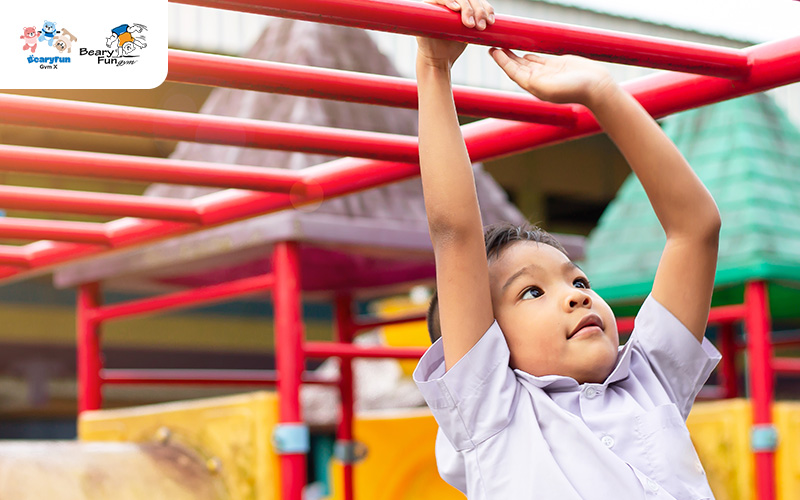
Mastering physical movements such as crawling, hopping, and balancing helps children develop strength, posture, and coordination. These are not just important for sport; they are also essential for daily tasks like putting on clothes, sitting upright at a desk, or walking confidently.
A strong base in motor skills development also supports physical independence. Children who feel physically capable are more likely to explore, take initiative, and participate in new experiences, whether it is joining a game, climbing on playground equipment, or trying a new sport.
Here at BearyFun Gym, our gymnastics classes for kids are designed to build these skills in a fun and safe environment, giving children the confidence to move and explore freely.
2. Enhances Brain Development
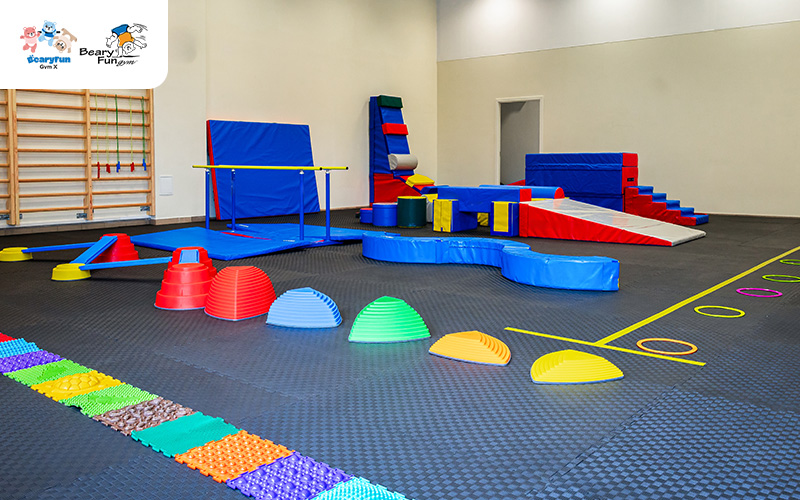
Movement and learning go hand in hand. Research shows that physical movements stimulate brain activity, helping to form the neural pathways needed for memory, focus, and decision-making. In fact, activities that involve coordination, such as rolling, catching, or following a movement sequence, can directly support cognitive development.
This is why movement-based learning is so effective in early childhood. In our children’s gym classes, children are encouraged to think as they move, whether it is solving a physical challenge, following a coach’s instructions, or imagining themselves moving through an obstacle course.
These activities also foster problem-solving and planning abilities that are essential for success in school and daily life.
3. Supports Emotional and Social Growth
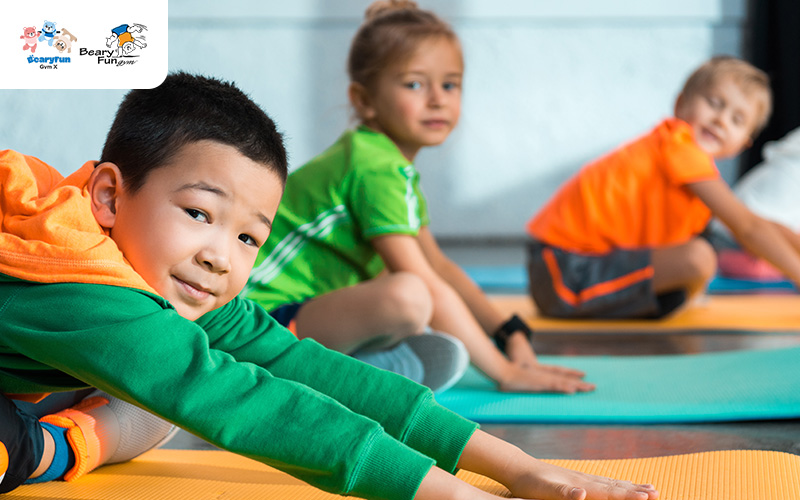
Movement also plays a major role in emotional and social growth. Children who feel confident in their bodies are more likely to join in group play, take on new challenges, and express themselves physically. This helps reduce social anxiety and builds a stronger sense of belonging.
At the same time, participating in gymnastics for kids offers a chance to develop important life skills such as taking turns, following instructions, and celebrating others’ successes. These moments of shared learning create a supportive environment where children can thrive not only as individuals but as part of a group.
From their first forward roll or their first time successfully balancing on a beam, each achievement in a gymnastics class becomes a moment of pride that improves a child’s self-esteem.
Developmental Milestones by Age
Each child develops at their own pace, but it helps to be aware of key motor skills development milestones. Understanding motor development by age gives parents and educators a helpful benchmark to guide support and early learning.
| Age Group | Gross Motor Milestones | Fine Motor Milestones |
|---|---|---|
| 1–2 years | Walks independently, climbs stairs with support, throws a ball | Turns pages in a book, stacks blocks, scribbles with crayons |
| 3–4 years | Runs with ease, jumps forward, pedals a tricycle | Holds a crayon with fingers, cuts paper, buttons large buttons |
| 5–6 years | Hops on one foot, skips, balances on beam | Draws simple shapes, writes some letters, uses utensils accurately |
| 7–12 years | Catches a ball consistently, rides a bike, improves coordination for sports | Writes neatly, ties shoelaces, manipulates small objects with precision |
Our programmes at BearyFun Gym are designed to support motor skills development for preschoolers, helping them build age-appropriate strength, control, and confidence through structured activities.
Practical Activities That Promote Motor Skills Development
Whether at home or in a class, engaging your child in activities for motor skills development helps build coordination and body awareness. At BearyFun Gym, our curriculum integrates age-appropriate movement exercises and preschool motor skills games into every session.
Here are some tried-and-tested motor skill exercises for young children:
Gross Motor Activities
– Obstacle Courses: Combining crawling, hopping, balancing, and jumping—staples in BearyFun Gym’s preschool sessions
– Animal Walks: Move like a bear, frog, or crab to develop strength and control
– Trampoline Play: Builds coordination and balance while offering sensory input
Fine Motor Activities
– Play Dough: Strengthens finger muscles through pinching, rolling, and shaping
– Bead Threading: Improves hand-eye coordination and pincer grasp
– Pre-Writing Games: Tracing shapes or lines using fingers or crayons to support early writing skills
Combining both types of movement ensures well-rounded growth and helps preschoolers develop confidence in their bodies and abilities.
The Role of Preschool Gymnastics in Motor Skills Development
Preschool gymnastics is more than just play; it’s a structured way to build a strong foundation of movement, focus, and confidence. Our preschool programme at BearyFun Gym is designed to align with early childhood milestones, blending fun with purpose for motor skills development.
Through activities such as rolling, balancing, jumping, and climbing, children get to practise key movements in a safe, nurturing environment. Each class is led by trained instructors who understand childhood development and ensure that every child gets hands-on support.
Our curriculum reinforces skills through repetition and variation, helping children progress steadily and meet developmental goals. From obstacle circuits to floor routines, gymnastics helps children become more aware of their bodies, improve control, and build confidence.
Whether your child is taking their first steps or ready to leap, preschool gymnastics for motor skills offers a joyful way to build strength and spark lifelong love for movement.
Common Parental Concerns & How to Address Them
What if my child is behind?
Every child develops at their own pace. However, if you’re concerned about delayed motor skills development, it’s best to seek guidance early. Early detection and intervention strategies can support your child’s growth through structured movement, play, or therapy.
Do screens hinder motor development?
Excessive screen time reduces opportunities for active play, which can impact motor growth. Encourage your child to engage in hands-on activities and physical movement daily.
How much practice is too much?
Balance is key. Short bursts of daily movement are more beneficial than long hours. Our classes are designed with age-appropriate durations and rest intervals to keep kids engaged without fatigue.
My child seems clumsy—should I be worried?
Clumsiness can be part of normal development, but if it affects daily function or confidence, professional observation may help. Our trial sessions are a good way to observe your child’s coordination in a safe setting.
Motor skills development is the foundation for a child’s physical confidence, mental sharpness, and emotional wellbeing. By engaging in regular, purposeful physical movements, children build the strength, coordination, and resilience they need to succeed in all areas of life.
At BearyFun Gym, we understand that movement is at the heart of early development. Our age-appropriate children’s gym classes are carefully designed to help your child build their motor skills in a fun, structured, and nurturing environment.
To learn more about our programmes and facilities, please contact us today.